
Final Workshop at ISEAS 2026
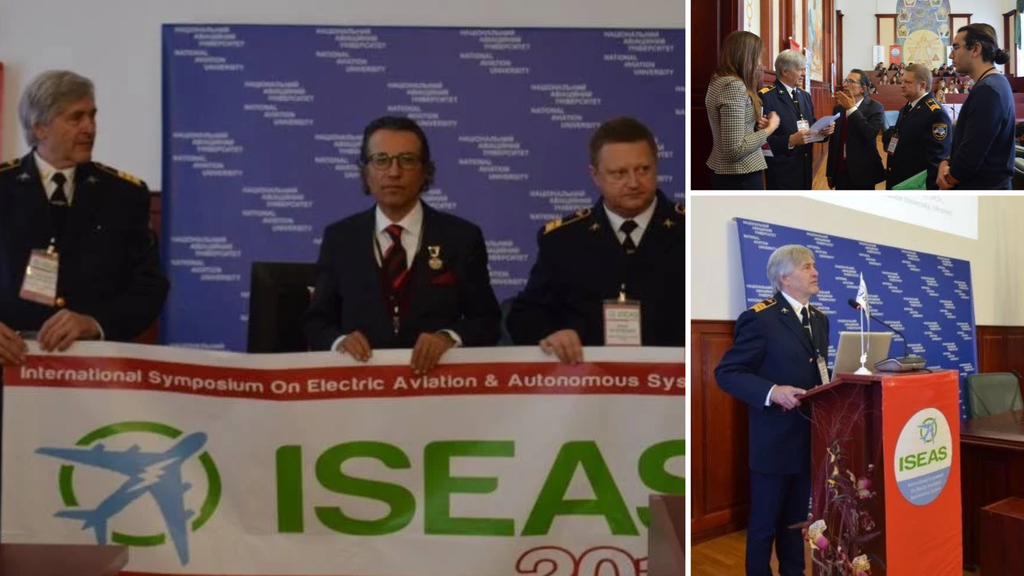
From 15 to 18 September 2026, the Environmentally Friendly Aviation for All Classes of Aircraft (EFACA) project held its Final Workshop as part of the International Conference on Electric Aviation and Autonomous Systems (ISEAS 2026) in Kharkiv, Ukraine. The event marked a milestone in the project’s 2023–2026 implementation period.
Organised by the Sustainable Aviation and Energy Research Society (SARES), ISEAS 2026 brought together more than 80 participants from the aviation research and innovation community, with EFACA partners participating both in person and online.
Showcasing EFACA’s achievements
EFACA contributed seven keynote presentations and two dedicated technical sessions, featuring ten scientific papers, covering electric and hybrid-electric propulsion, hydrogen-powered aircraft, emissions and climate impact, noise modelling, sustainable aviation fuels, and the decarbonisation of supply chains. Highlights included a hydrogen-powered passenger aircraft concept designed for 150 passengers with a range of 2,000 km, and an 80-seat regional aircraft concept with hybrid turbo-electric hydrogen propulsion.
The two technical sessions, “EFACA Concept Aircraft and Impact on Environment” and “Sustainable Aviation Ecosystems: From Green Aircraft Design to Clean Supply Chains”, reflected an integrated approach to aviation sustainability, from aircraft design to cleaner supply chains.
A Significant Milestone in the EFACA Project Journey
The successful organisation of the Final Workshop marks an important step towards the completion of EFACA, bringing together the research activities undertaken throughout the project and highlighting visibility to its scientific achievements.
The scientific contributions presented at ISEAS 2026 are going to be published by Springer in the Sustainable Aviation series, extending the dissemination of EFACA’s research results to the wider international scientific community.
As EFACA approaches the end of its implementation period, the Final Workshop stands as a significant milestone, reflecting the collective efforts of its partners and their contribution to advancing research and innovation towards a more sustainable aviation sector.
More information: https://2026.iseasci.org/